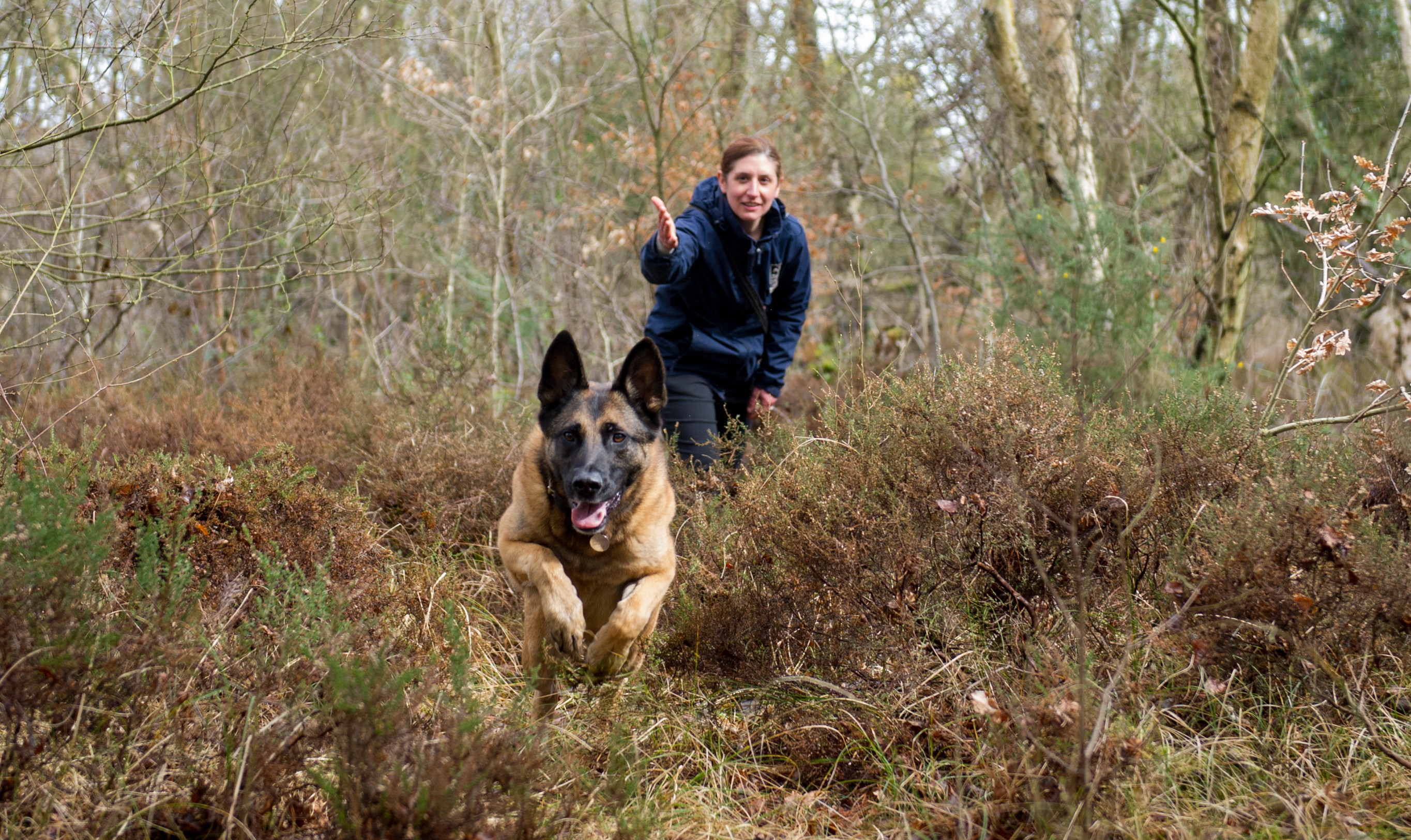

Rachel holds an MSc in Ecology and previously worked as an RSPCA Inspector, an experience that informs her practical, welfare-led approach to training and fieldwork.
She leads all training and survey delivery at RM Conservation and contributes to sector best practice as a former Chair and current Board Secretary of the Ecology Detection Dog Britain & Ireland Working Group.
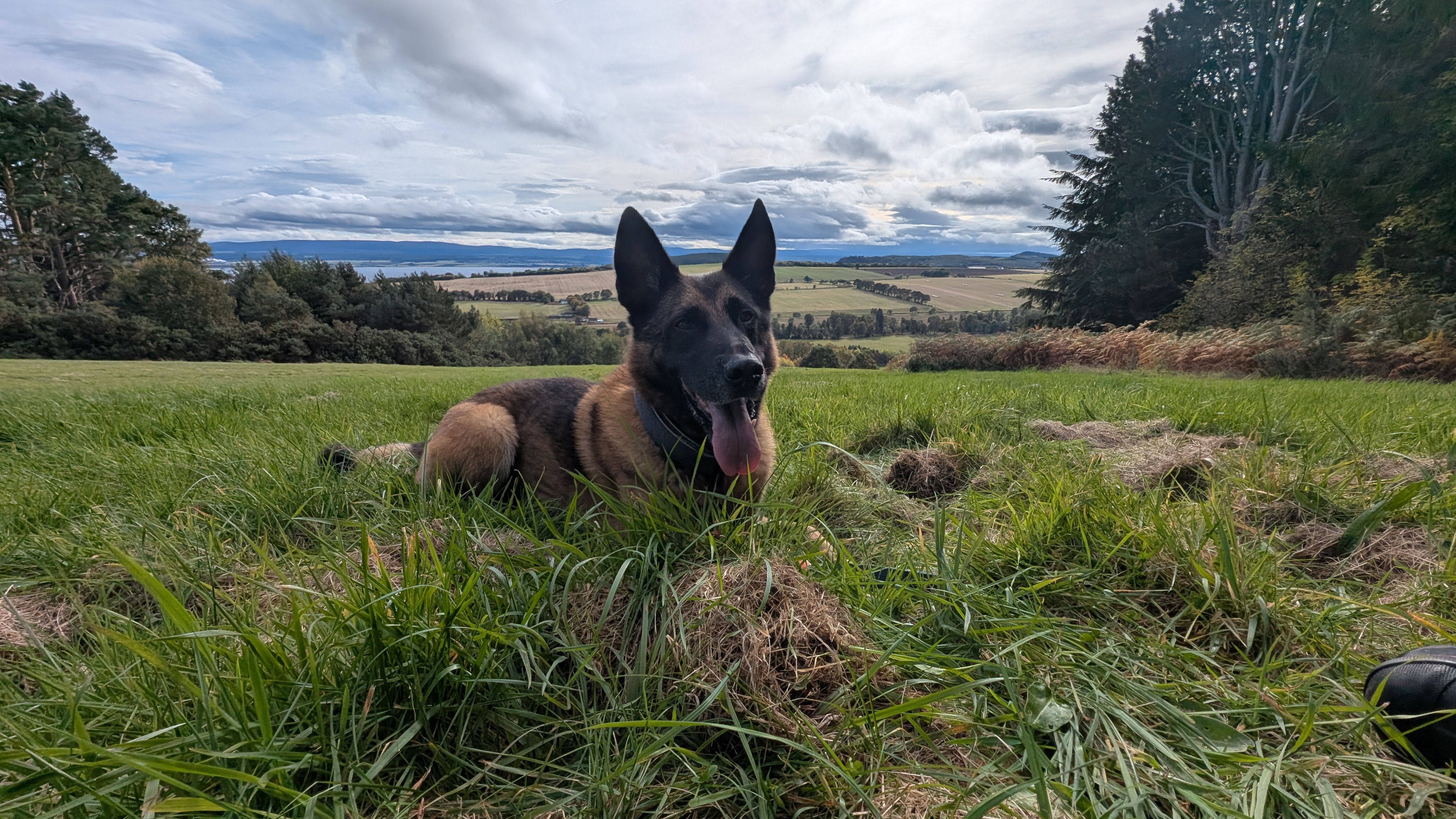
Breed: Belgian Malinois X GSD
Max is the most experienced member of the team and has proven his abilities across a wide range of projects.
His forte is his calm and detailed search.
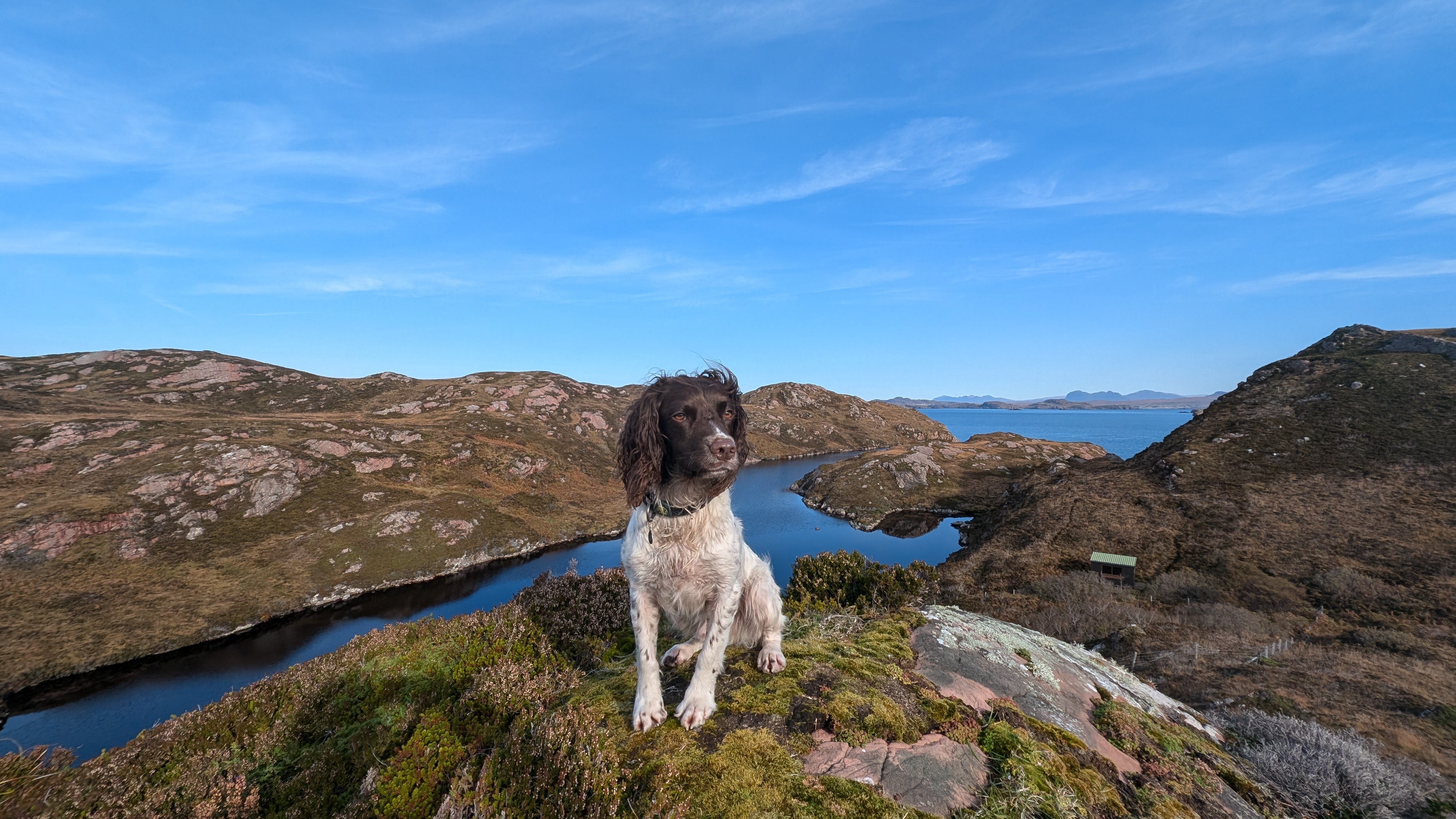
Breed: English Springer Spaniel
Reid is comfortable working across varied terrain and challenging environments as well as searching cargo and vessels.
He is experienced travelling on small RIBs, large ferries, planes, and trains.
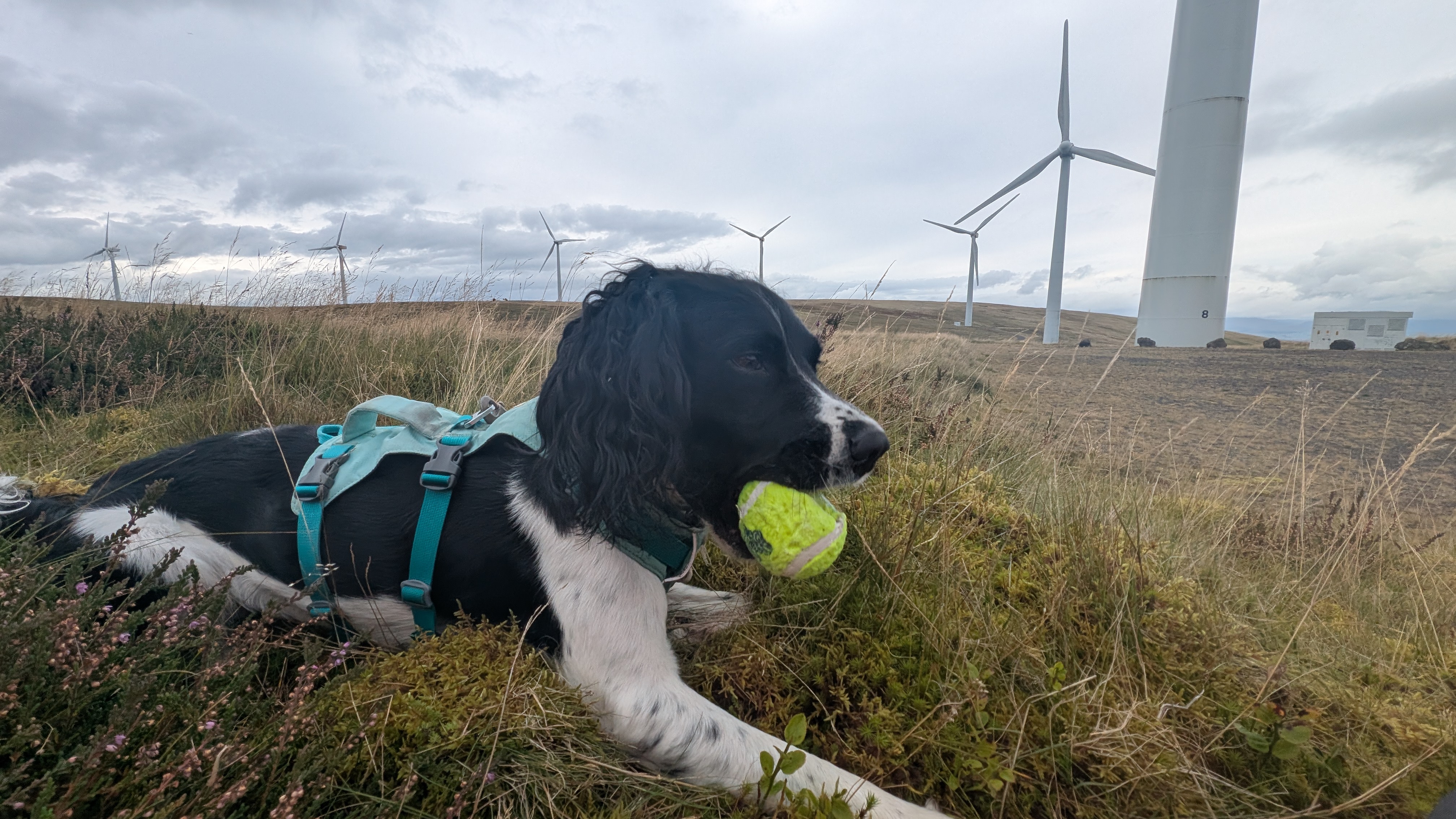
Breed: English Springer Spaniel
Raven is a very focused dog with an excellent work ethic.
She is well suited to a wide range of projects but particularly excels at detailed searches in complex environments.
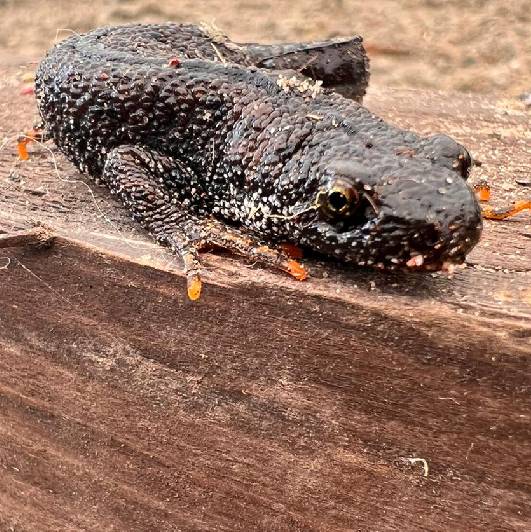
Detection dog surveys to support ecological and conservation projects, including bat carcass and great crested newt detection.
Dogs are used where they offer a clear benefit over traditional survey methods.

Applied research and method development relating to the use of detection dogs in ecology and conservation.
This includes field-based research, collaborative projects, and contribution to best practice guidance.
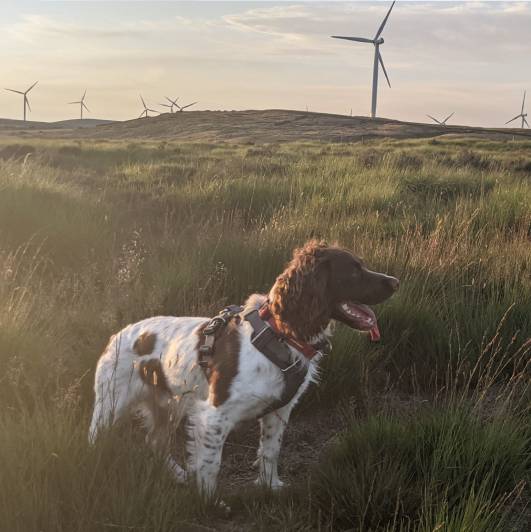
One-to-one mentoring for individuals developing detection dogs for ecological work, alongside project-level professional support.
Delivered remotely or in person, mentoring covers training approaches, welfare considerations, suitability for field environments, and practical survey realities.
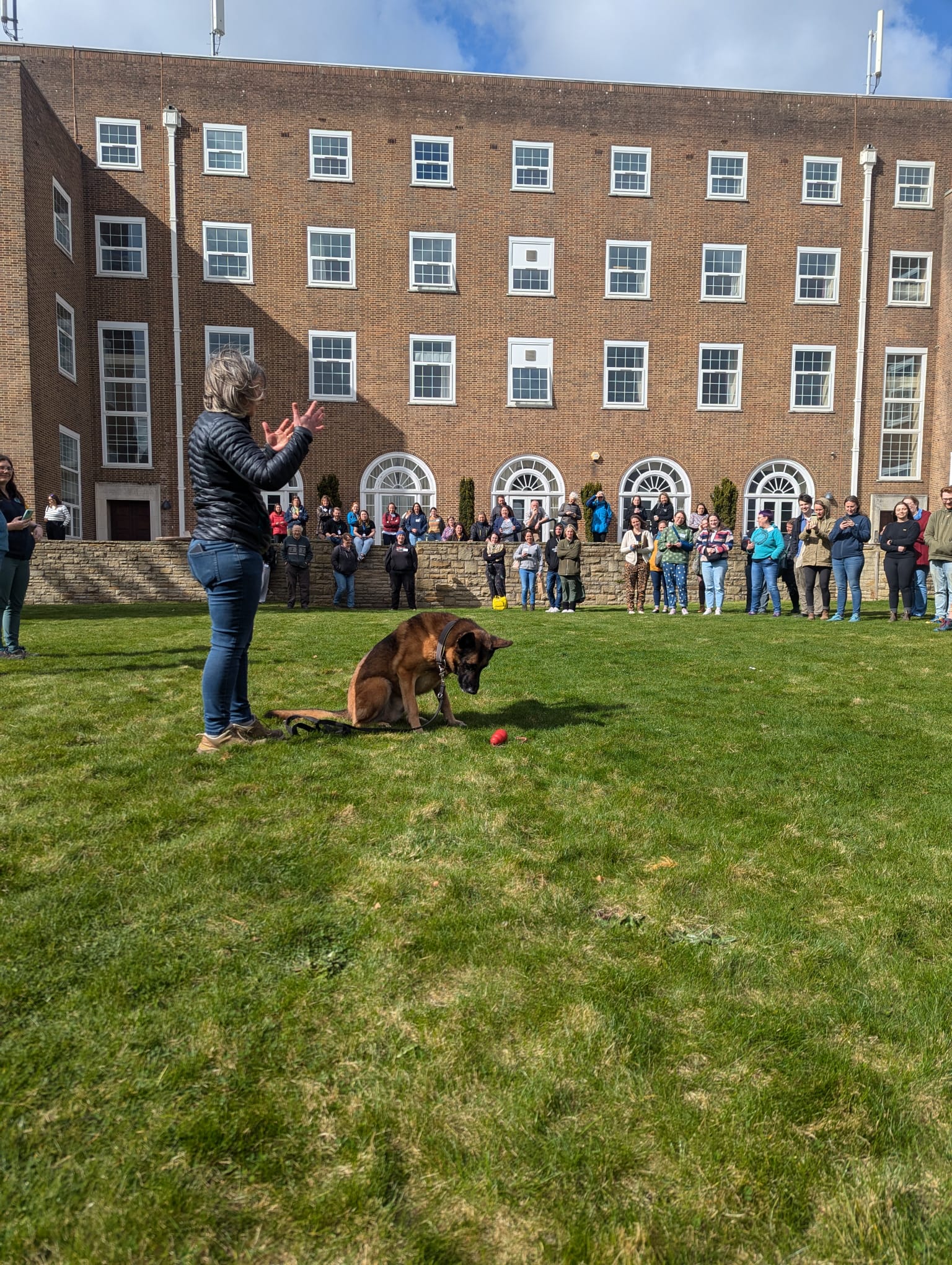
Tailored talks and practical demonstrations covering detection dog methods, training, welfare, and survey application.
Delivered for universities, consultancy teams, professional events, and conferences.
All work at RM Conservation is planned and delivered in line with relevant legislation, guidance, and best practice for ecological survey work involving detection dogs. Survey design takes account of site conditions, target species ecology, seasonal constraints, and reporting requirements, ensuring methods are appropriate, compliant, and defensible within wider ecological assessments. Where required, surveys and training are carried out under the appropriate licences, including Natural England licences for Great Crested Newt work.
Health, safety, and biosecurity are integral to all projects, with site-specific risk assessments, method statements, and biosecurity measures in place. RM Conservation regularly works on active development and construction sites, the lead handler holds a valid CSCS card and has completed Lantra-accredited training as a Conservation Detection Dog Handler.
Detection dog, Max training to search fencing for Great Crested Newts.
Training is a core part of our work at RM Conservation and is approached as a process rather than a fixed outcome. Our dogs are trained specifically for ecological survey work and carefully selected for suitability to physically and mentally demanding field environments.
Training takes place across habitats and site types similar to those encountered during surveys. Our dogs are trained not to interfere with target odours, ensuring the welfare of live species and preventing sample contamination. They can work safely on and off lead around wildlife and livestock, adapting search styles for large areas or detailed searches.
Behind-the-scenes training and field preparation are shared on Instagram and LinkedIn.
A montage of detection dog Raven's indication training
If you would like to talk to us about a potential project or would like to see a demonstration of our dogs in action, please get in touch.